
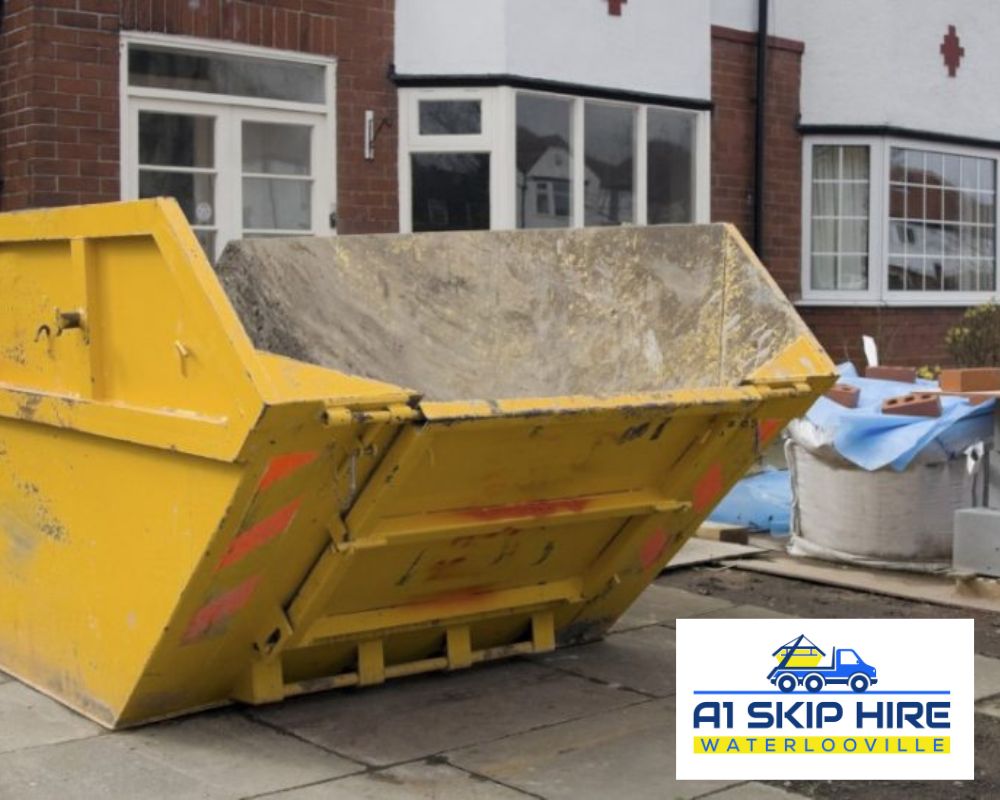
Skip hire in Bishop's Waltham
A bishops' palace town with Georgian frontages, workers' terraces from the clay works and a recycling centre on Claylands Road. Decide on a skip, then check the live cost.
- Local councilWinchester City Council
- Road permitsHampshire County Council
- Nearest tipClaylands Road, in town
- Typical homesGeorgian frontages and brickworks terraces
Skips for a market town built on bishops and clay
Bishop's Waltham is a small town in the Hampshire countryside, and its past is unusually visible. Wikipedia tells how Bishop Henry de Blois began a palace here in 1158, how Cromwell's forces destroyed it in the Civil War, and how its ruins are now managed by English Heritage. Stone from the palace was reused in town buildings that still stand. The town also has Georgian houses, a Norman parish church and a listed High Street of independent shops.
A skip job in this setting could be a Georgian shopfront being refitted, a terraced house in the old brickworks district being gutted or a large garden being cleared. The sections that follow deal with sizes, positioning, the on-street licence and the recycling centre. Our partner Just Hire takes the booking online.
The booking page wants your postcode first, and then quotes a price once you have picked size, waste type and placement. Payment to Just Hire is what makes a booking real, after which its suppliers nearby bring the skip and take it back.

Four town jobs and the skip to match
- 4-yard midi skipa shop unit or café stripped out on the High Street
- 6-yard builders skipa terraced house in Newtown with plaster and floors out
- 8-yard builders skipa new kitchen, bathroom and flooring in a family home
- 12-yard maxi skipa large house cleared before a sale or probate
Where a skip fits in a town of old streets
The town centre has the kind of narrow, historic streets that suit short stays, while the edges have more room.
On a driveway
Homes on the outer roads usually have a drive or a hardstanding, and a skip kept inside your own boundary needs no highway licence. Look for low branches, and use boards if the surface is paved.
On the road
If the house fronts the pavement, the skip goes on a public road, which Hampshire County Council licenses. Pick roadside and Just Hire does the application; leave about five working days.
Wait and load
In the narrow streets around the High Street a skip left for days blocks traffic. Wait and load limits it to half an hour of filling, after which the lorry leaves with the load.
A town built from palace stone and clay bricks
Wikipedia gives the town's story in layers. Anglo-Saxon settlement came first, the Bishops of Winchester owned it from the early tenth century, and in 1158 the palace began. By the nineteenth century it was a market town with agricultural merchants, a cattle market and a gasworks, and Gunner and Company, founded in 1809, became the last provincial private bank in the UK before Barclays bought it in 1953.
The other layer is clay. Arthur Helps founded the Bishop's Waltham Clay Company in 1862, and it merged with Blanchard and Co. in 1880. Blanchard made bricks and terracotta, some of which Wikipedia says went into buildings such as Buckingham Palace and the Natural History Museum. The works closed in 1957 and the site is now the Claylands industrial estate. Helps also built housing for brickworkers in the Newtown district.
For anyone planning a skip, those layers mean two kinds of building: older stone-and-brick houses in the centre, and workers' housing and later estates beyond. Each calls for a different approach to the placement and the type of waste.
Newtown, terraces and heavy rubble
Houses built for brickworkers are solid and unfussy, and a refit tends to reveal thick walls, lime plaster, chimney breasts and old floors. That means a lot of heavy material for a small volume.
Book bricks, mortar, tiles and plaster rubble as hardcore, and keep it apart from light waste. Rubble in a four or six-yard skip hits the weight limit well before the skip is full, so going smaller is often right, or using two skips one after the other.
Where the house has no front garden, the skip would sit in the road, unless wait and load is chosen. If you are working on a terrace with several neighbours, tell them the date. A skip on a street of parked cars will take one or two spaces.
Ask your builder to take out any lead flashing, copper pipe or old radiators separately; metal has value and does not need to take up room in the skip.
The conservation area around the palace and High Street
Bishop's Waltham has a conservation area designated in 1973, according to the city council's 2016 design statement, and the council publishes a map of it. Wikipedia notes that the High Street is listed. A technical assessment for the area sits on the council's website.
A conservation area does not stop you hiring a skip. No separate skip rule appears in the pages we read, so the usual division holds: private ground is exempt from the highway licence, the road is not. Heritage rules matter for the building, not the skip.
If your property is listed or in the conservation area, check what consent your work needs before removing windows, doors, shopfronts or roof coverings. Those matters sit with the city council. Once you know what is allowed, book a skip that suits it.
The northern part of the parish lies inside the South Downs National Park, according to the same design statement. Planning is dealt with differently there, but the body responsible for the roads is still Hampshire County Council.
Licences for a skip on the High Street and side roads
Highways in the town are the county's responsibility rather than the city council's. Hampshire's published licence terms keep skips off the highway until approval has been formally given, reject assumed consent, and need five clear working days between request and start. Only approved skip companies apply.
Select roadside when you book and Just Hire puts the request in. A market day, festival or roadworks can lead the county to refuse a clashing date, so keep some give in yours.
Parking is a second question. Nothing published about a residents' parking zone in the town came up, so we say nothing about one. Do not plan to leave a skip in a public car park; that needs separate agreement from the owner.
Our guide to getting permission for skips on public property explains the steps.
Shops, flats and High Street refits
The town has a good run of independent businesses, and Wikipedia notes that shop owners have resisted larger chains. That means fit-outs, closures and handovers on a small scale, often with flats above.
Shopfronts and units
A small unit needs nothing bigger than four to six yards. A road licence in a shopping street is the hardest part, so wait and load is usually better: you control the timing and the street is clear.
Flats above shops
Access can be through a shared passage. Make sure the skip is where the lorry can reach and that no one needs to carry waste through a neighbour's door at awkward hours.
Offices and storerooms
Old shelving, desks, boxes and carpet go into a mixed skip. Anything electrical, such as monitors and printers, does not.
Conversions here have a track record. The ornate Working Men's Institute on Bank Street stayed open until 2003 and was then turned into housing, according to Wikipedia, and the former gasworks and cattle-market trades of the nineteenth century left other commercial buildings that have since changed use. A conversion of that kind leaves old partitions, shelving and fittings as well as the usual plaster and timber, so ask for a size a step up from the one you first had in mind.
Visitors, the palace ruins and choosing a quiet day
The palace ruins are open to the public under English Heritage, and the town draws visitors to its shops and churchyard. On busy days the centre fills with cars looking for somewhere to park, which is bad timing for a skip lorry that needs a clear stretch of kerb and a few minutes to lift.
Picking your delivery date means thinking about the week as well as the day. Aim for a midweek slot that avoids school drop-off and any market or event, and tell neighbours so that they leave the space free.
Up to 14 days of hire is plenty for most projects. If you only need a day, wait and load does the same job without the licence, though you must have the waste ready to load as soon as the lorry arrives. Sort it into piles and move it to the gate beforehand.
Residents of older houses in the centre sometimes have a back lane or shared passage. If the lorry cannot get a skip there, nothing will be gained by arguing with the driver; plan the placement for the front, or choose wait and load.
Big gardens on the edge of town
Beyond the centre the town gives way to larger plots and open countryside, and gardens here can be extensive. A single winter's growth, a collapsed fence or a fallen tree can leave a pile that a 12-yard or larger skip handles easily.
Book garden waste for branches, hedge cuttings, grass and leaves. Soil is its own type, supplied free of rubble and turf. If you are not sure which size you need, our guide to choosing a skip for garden clearance gives examples.
Branches should be cut to length and laid flat, otherwise the skip fills with air. If a tree is coming down, a tree surgeon often deals with the felling and chipping, and a skip takes the rest.
The recycling centre on Claylands Road
The county council operates a household waste recycling centre on Claylands Road, inside the town, and the city council counts it among four in the district. Take it the items a skip rejects: white goods, screens, batteries, paint, tyres and similar. Our guide to hazardous materials and skips lists what to keep out.
Every Hampshire centre asks you to book a slot ahead, and summer and winter hours differ, so check the finder that day.
The county has previously consulted on the future of smaller centres, and Bishop's Waltham was among those mentioned, so confirm it is open before you set out. With the sorting decided, the booking page will show a live skip price the moment you enter a postcode.
Skip hire near Bishop's Waltham
Bishop's Waltham draws on Waltham Chase and Swanmore close by, then Horton Heath, Botley, Fair Oak, Wickham, Hedge End and Whiteley across the wider countryside.
Frequently asked questions
Can a skip go outside a High Street shop in Bishop's Waltham?
Only with the county's road licence, which Just Hire requests. In narrow streets wait and load often works better, since nothing is left behind.
Is there a conservation area rule on skips?
The council pages show no separate skip rule. The town centre conservation area bears on building work, so check consent for that rather than for the skip.
Where is the nearest recycling centre?
Hampshire's Claylands Road centre, in the town itself. A booked slot is required, and the county finder lists current hours.
What skip suits a brickworks-era terrace refit?
Normally four or six yards. Old brick and plaster weigh a lot, so book rubble as hardcore and keep it away from light waste.
How much notice does a road skip need?
The county wants a minimum of five working days from filing to start, and a clash with works on that date can bring a refusal.